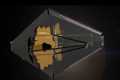
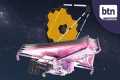
The James Webb Space Telescope has just picked up something in Threeey Atlas that does not fit the simple mental picture most people have of what an interstellar wanderer should be. The object itself is already unusual, only the third confirmed visitor from beyond our solar system, moving along a trajectory the Sun cannot bind. But the real shock is not that it arrived. It is what Webb detected when it turned its infrared instruments toward the faint cloud surrounding the nucleus and broke that light into a detailed chemical spectrum.
Before we continue, remember to like and subscribe for more updates.
In infrared observations, comets and comet-like bodies are usually straightforward storytellers. Sunlight warms their surfaces, buried ices awaken, and a coma forms with familiar signatures. Water vapor appears, along with carbon dioxide, carbon monoxide, and a dust continuum that hints at how gritty or fine the material is. From the spectrum, scientists can piece together what the object is made of, how active it is, and how much alteration it has experienced over time.
Interstellar objects are expected to be more extreme in some respects. They should be more irradiated, more battered by cosmic rays, and possibly depleted in the most volatile compounds after long journeys through deep space. Odd ratios and surprises are anticipated, but the chemistry is still expected to balance in the end.