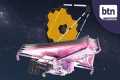
A telescope floating a million miles from Earth pointed its gold-plated mirror at what looked like empty darkness. It stared for days. What it found was not supposed to be there. Galaxies as massive as the Milky Way, fully assembled, when the universe was only three percent of its current age. Supermassive black holes that grew too large too fast for any known physics to explain. Structures spanning millions of light years already woven together in an era the standard model says should have been nearly empty. Scientists called them universe breakers. They rechecked the instruments. They recalculated the data. The objects did not go away. And then they found three hundred more. This is the story of what the James Webb Space Telescope found at the beginning of time, and why it is forcing us to rewrite what we thought we knew about how the universe was built. - COPYRIGHT & ASSET DISCLAIMER: This video is created for educational and astronomical storytelling purposes. The visual assets, including space footage, images, and animations, are sourced from public domain databases and Creative Commons licenses provided by institutions such as NASA, ESA, ESO, and Wikimedia. Proper attributions for any CC-licensed materials are visually included in the video or listed below. - Credits: NASA ESA: https://www.esa.int/ESA_Multimedia/Videos ESO: https://www.eso.org/public/videos/