Exoplanets are rewriting the rules of what we thought planets could be.
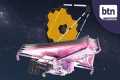
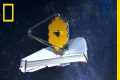
Theoretical cosmologist Dr. Paul Sutter unpacks how we’re discovering planets beyond our wildest imagination. From ultra-hot gas giants to rocky Earth-like worlds, astronomers have now found thousands of planets orbiting stars beyond our solar system. This is thanks to telescopes like Kepler, TESS, and the James Webb Space Telescope. Kepler alone revealed over 5,000 exoplanets, while TESS is zeroing in on those closer to Earth. James Webb is now studying their atmospheres in unprecedented detail, and future missions like the Nancy Grace Roman Telescope and Habitable Worlds Observatory aim to find thousands more with hopes to even detect potential biosignatures, or evidence of life.
Among the world's largest science centers, the Museum of Science engages millions of people each year to the wonders of science and technology through interactive exhibitions, digital programs, giant screen productions, and preK – 12 EiE® STEM curricula through the William and Charlotte Bloomberg Science Education Center. Established in 1830, the Museum is home to such iconic experiences as the Theater of Electricity, the Charles Hayden Planetarium, and the Mugar Omni Theater. Around the world, the Museum is known for digital experiences such as Mission: Mars on Roblox, and traveling exhibitions such as the Science Behind Pixar. Learn more at https://www.mos.org/