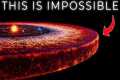
NASA’s James Webb Space Telescope has revealed something in the early universe that many scientists say should not exist. Using Webb alongside the Chandra X-ray Observatory, astronomers detected a surprisingly mature and massive cluster of galaxies forming far earlier than current models predict.
This James Webb Telescope discovery has sparked intense debate, with Nobel Prize–winning scientists openly questioning whether our understanding of galaxy formation — and even the early universe itself — is incomplete.
In this video, we explore what Webb actually saw, why this discovery is so unsettling, and how it could force a major rethink of cosmology as we know it.
The universe may be far older, faster, and more complex than we ever imagined. For decades, cosmology has rested on a carefully built framework explaining how the universe began and evolved. But now, something unexpected has entered the picture. Too Late to Apologize! James Webb Telescope Finds First Real Evidence that Shatters Our Cosmology takes you inside observations that are forcing scientists to confront uncomfortable questions about everything they thought they knew.
As the James Webb Telescope peers deeper into space and further back in time, it’s uncovering galaxies that appear too old, too massive, and too structured for the early universe. These findings don’t just stretch existing theories—they crack them. What was once dismissed as noise or error is now lining up as real evidence, and it’s becoming harder to explain away.