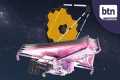
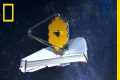
The James Webb Space Telescope was designed to study the universe’s first light. Instead, it uncovered a cosmos that appears far larger, denser, and more developed than theory predicted.
By observing faint infrared light from the distant past, Webb revealed an observable universe nearly 93 billion light years across and possibly filled with trillions of galaxies. Even more troubling, many early galaxies and supermassive black holes seem to have formed too quickly, growing massive and structured within a timeframe that standard Big Bang models struggle to explain.
• Why early galaxies appear bright and mature far sooner than expected • How supermassive black holes grew to enormous sizes in cosmic infancy • Possible chemical fingerprints of Population III stars • Evidence that dark matter shaped structure earlier than predicted • What redshift data and cosmic voids reveal about expansion • Why the Hubble tension persists despite Webb’s precision
NASA researchers urge caution, while cosmologists debate whether early universe conditions, unknown physics, or missing ingredients in current models are responsible. Webb has not disproven known laws, but it has revealed where those laws may fall short. What do you think really happened out there?
🔔 Subscribe to Maybe Science channel to unwind and explore the cosmos. Enjoy relaxing documentaries that reveal the beauty of galaxies, the rhythm of nature, and the science that connects it all — ideal for curious minds and calm hearts. --- #MaybeScience #space #3IATLAS #Oumuamua #Mars #Astronomy #SleepDocumentary #SpaceMystery #AlienProbe #astrophysicsresearch #Cosmos #Interstellar #AstronomyDocumentary #UnexplainedMysteries #SpaceExploration #AlienLife #ScienceDocumentary #calmvideo #sleepvideo