The search for a truly Earth-like world has entered a fascinating new phase, but there is an important distinction between a habitable-zone planet and a fully habitable planet. NASA defines the habitable zone as the region around a star where conditions could potentially allow liquid water on a planet's surface. That alone does not prove that a planet has an atmosphere, oceans, or life.
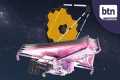
In this video, we examine what the James Webb Space Telescope can actually reveal about potentially habitable exoplanets, including their atmospheres, temperatures, chemical composition, and possible signs of water. Webb has already transformed exoplanet research by allowing scientists to investigate the atmospheres of worlds far beyond our Solar System.
One particularly interesting target is TRAPPIST-1 e, an Earth-sized rocky planet located within its star's habitable zone. NASA scientists are using Webb to investigate whether it possesses an atmosphere and what that atmosphere might look like. But researchers have emphasized that the observations are still being analyzed, meaning we cannot yet call it a confirmed second Earth.
Another recently studied world, HD 137010 b, has been described as potentially temperate or even watery under certain atmospheric conditions. NASA estimates a 40% chance that it falls within the conservative habitable zone and a 51% chance within the broader optimistic zone—but again, “potentially habitable” is very different from “fully habitable.”
So what would scientists actually need to discover before calling a planet genuinely Earth-like? We explore the evidence for liquid water, atmospheres, suitable temperatures, planetary composition, stellar activity, and possible biosignatures—and why finding one promising molecule would not automatically prove life exists there.
The real story may be even more exciting than the headline: Webb is giving astronomers the tools to move from simply finding planets to asking whether some of them could actually support environments suitable for life. NASA says future exoplanet research is increasingly focused on rocky worlds and atmospheric biosignatures.
This video is for educational and informational purposes only. No James Webb observation currently proves that a “fully habitable” planet has been discovered. Habitable-zone location, atmospheric detection, surface conditions, and evidence for life are separate scientific questions.
If you found this space investigation useful, make sure to like the video, subscribe to the channel, and turn on notifications so you don't miss our latest coverage of James Webb, NASA, exoplanets, habitable planets, Earth-like planets, alien worlds, space discoveries, astronomy, planetary science, and the search for life beyond Earth.
20 SEO Keywords
James Webb Telescope, James Webb habitable planet, NASA habitable planet, habitable exoplanet, Earth-like planet, Earth 2.0, James Webb exoplanet, NASA exoplanet discovery, habitable zone planet, potentially habitable planet, exoplanet atmosphere, signs of life, alien planet, search for life, Earth-like exoplanet, Webb telescope discovery, NASA space news, exoplanet discovery 2026, habitable planet explained, life beyond Earth